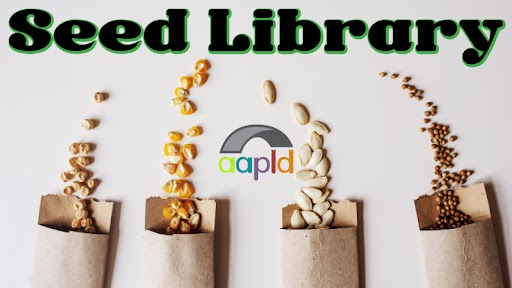
Get Planting! Seed Library Returns March 1!

Just in time for spring planting, Algonquin Area Public Library, is excited to offer the Seed Library which provides seeds to local gardeners free of charge!

How It Works

Take a look at the Seed Library Catalog. Each listing includes photos and descriptions of plant varieties, along with helpful details on when, where, and how to plant them. Seed packet quantities range from 2 to 20 seeds, depending on the plant type.

Visit the Adult Services desk at the Main Library on Harnish Drive to explore our Seed Library collection in person, and take up to 20 packets/household, one per variety.

What Seeds Are Available?

garden fresh vegetables Carrots, cauliflower, tomatoes, leeksChoose from over 130 varieties of vegetable, fruit, flower and herb seeds! Options include:

  • Vegetables - Cucumbers, lettuce, onions, squash, tomatoes
  • Herbs- Basil, chives, cilantro, parsley, thyme and more
  • Garden Favorites- Carrots, beans, leeks, melons and cauliflower
  • Flowers and Landscaping- Daisies, zinnias, sunflowers
  • Annuals & Perennials- Plants that bloom for a season, or return each year


Do I Have To Return The Seeds?

Although we call it a "Seed Library," no library card is required and you don't need to return seeds from your harvest. However, we'd love to see photos of your garden and crops! Email them to us at info@aapld.org

If you have leftover seeds, simply store them in their packets in an airtight glass jar, and keep it in a cool dark place like your basement or garage, for future planting.

Meet February’s Artist of the Month

February’s exhibit on the Art Wall at the Main Library on Harnish Drive, “Echoes of Hiroshima, A Survivor’s Story” depicts the experiences of Masakazu Saito, who survived the detonation of the atomic bomb on Hiroshima Japan, a little more than a mile from the epicenter. 

The exhibit displays a series of watercolors painted by an unknown artist, which Saito commissioned twenty-five years ago. Now 101, Saito has dedicated his life to advocating for peace and the abolishment of nuclear weapons.

Join us on Thursday, February 26 at 7:00 p.m. for Echoes of Hiroshima, A Survivor’s Story, a moving virtual program commemorating the Hiroshima bombing on August 6, 1945. This event pays tribute to those affected by nuclear war while sharing an urgent message of peace. 

Presenter Clinton Fairbanks shares Saito’s unforgettable story. At the age of 20, Saito was a squad leader in the Imperial Army’s Communications Division, living in a barracks just 1,800 metres from where the bomb hit. Gravely injured but resilient, Saito lived to share his experiences through the watercolors, and also a book, ninety seconds past midnight: an atomic survivor’s story. Fairbanks collaborated with Saito on the book, which his wife, Kaoru Fairbanks translated.

Fairbanks is a photographer and storyteller who has worked with creative communities in the U.S., Japan and other countries. He said that he’s drawn to stories of people, memory, resilience, and the moments that define a life. “My work explores how personality, history, and imagination intersect, especially stories that bridge generations and cultures. The book presents a historical biography centered on Mr. Saito’s lived experience,” Fairbanks said. 

“I believe storytelling preserves voices that might otherwise fade. Mr. Saito’s story, in particular, has become a calling to share the most important message of peace, forgiveness, and remembrance.”

Learn more about Fairbanks and his work at his website.  His books, including ninety seconds past midnight, are available from Amazon.  Those wishing to support the continued sharing of Mr. Saito’s message of peace may contribute through GoFundMe.


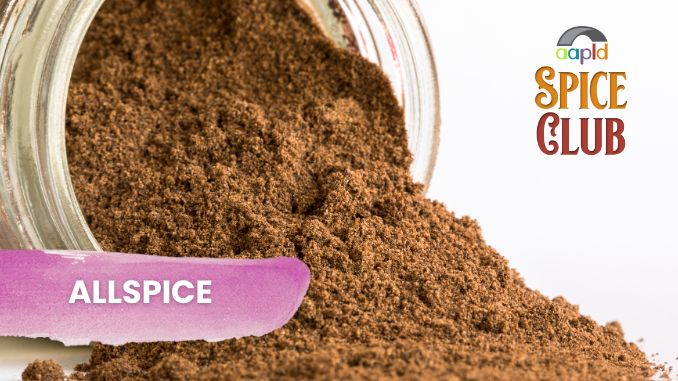
Spice Club – February 2026 – Allspice

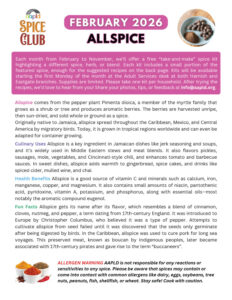
Allspice comes from the pepper plant Pimenta dioica, a member of the myrtle family that grows as a shrub or tree and produces aromatic berries. The berries are harvested unripe, then sun-dried, and sold whole or ground as a spice. Originally native to Jamaica, allspice spread throughout the Caribbean, Mexico, and Central America by migratory birds. Today, it is grown in tropical regions worldwide and can even be
adapted for container growing.

Culinary Uses: Allspice is a key ingredient in Jamaican dishes like jerk seasoning and soups, and it’s widely used in Middle Eastern stews and meat blends. It also flavors pickles, sausages, mole, vegetables, and Cincinnati-style chili, and enhances tomato and barbecue sauces. In sweet dishes, allspice adds warmth to gingerbread, spice cakes, and drinks like spiced cider, mulled wine, and chai.

Health Benefits: Allspice is a good source of vitamin C and minerals such as calcium, iron, manganese, copper, and magnesium. It also contains small amounts of niacin, pantothenic acid, pyridoxine, vitamin A, potassium, and phosphorus, along with essential oils—most notably the aromatic compound eugenol.

Fun Facts: Allspice gets its name after its flavor, which resembles a blend of cinnamon, cloves, nutmeg, and pepper, a term dating from 17th-century England. It was introduced to Europe by Christopher Columbus, who believed it was a type of pepper. Attempts to cultivate allspice from seed failed until it was discovered that the seeds only germinate after being digested by birds. In the Caribbean, allspice was used to cure pork for long sea voyages. This preserved meat, known as boucan by Indigenous peoples, later became associated with 17th-century pirates and gave rise to the term “buccaneers”.

ALLERGEN WARNING: AAPLD is not responsible for any reactions or sensitivities to any spice. Please be aware that spices may contain or come into contact with common allergens like dairy, eggs, soybeans, tree nuts, peanuts, fish, shellfish, or wheat. Stay safe! Cook with caution.

Download Recipes