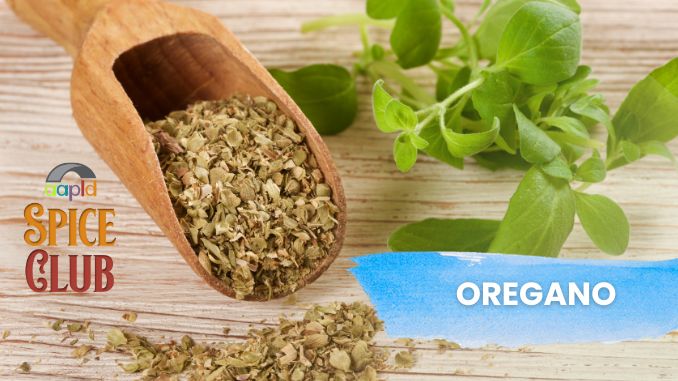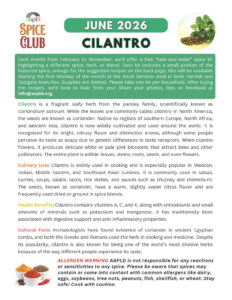
Rosemary (Salvia rosmarinus) is a fragrant evergreen herb native to the Mediterranean region and a member of the mint family. It is recognized by its narrow, needle-like leaves, woody stems, and strong pine-like aroma. It grows best in sunny, warm climates and is commonly cultivated in gardens as both a useful herb and an ornamental plant.
Culinary Uses: Rosemary is widely used in cooking because of its bold, earthy, slightly peppery flavor. It pairs especially well with roasted potatoes, vegetables, chicken, lamb, pork, and beef. It is also commonly added to breads such as focaccia, soups, stews, marinades, and infused oils. Fresh rosemary is often preferred for roasting and grilling, while dried rosemary works well in slow-cooked dishes. Whole sprigs can be added to sauces or roasted dishes for flavor and removed before serving, while chopped leaves can be mixed directly into recipes.
Health Benefits: Rosemary contains antioxidants and compounds such as rosmarinic acid that may help reduce inflammation and protect cells. It has traditionally been used to aid digestion and improve circulation. Some studies also suggest its aroma may support memory, focus, and alertness.
Cultural Facts: Rosemary’s name comes from Latin words meaning “dew of the sea,” likely referring to its coastal Mediterranean origins. In ancient Greece and Rome, rosemary symbolized remembrance, loyalty, and fidelity. It was often used in weddings, funerals, and ceremonies. William Shakespeare mentioned rosemary in Hamlet with the line, “There’s rosemary, that’s for remembrance.” Rosemary plants can live for many years and may grow into large shrub-like bushes. Their small flowers are highly attractive to bees, and rosemary honey is considered a delicacy in some parts of the world.
ALLERGEN WARNING: AAPLD is not responsible for any reactions or sensitivities to any spice. Please be aware that spices may contain or come into contact with common allergens like dairy, eggs, soybeans, tree nuts, peanuts, fish, shellfish, or wheat. Stay safe! Cook with caution.


Jane Hamilton is the author of eight novels, including The Book of Ruth, and A Map of The World, which were both Oprah's Book Club selections. A Map of the World was also adapted for a film starring Sigourney Weaver. Hamilton's latest novel, The Phoebe Variations, is a coming of age story set in the 1970s, and was published in September, 2025. It was selected as an Oprah Daily Best Book of Fall, an Indie Next Pick, and a Library Reads. She is a recipient of the Hemingway Foundation/PEN Award, among other recognitions.
Elizabeth Berg has published thirty-one books, including novels, novellas, non-fiction, short story and essay collections. Her best-known works include Open House (an Oprah's Book Club selection), Talk Before Sleep, and The Story of Arthur Truluv. Her latest novel, Life, A Love Story tells the story of a 92-year-old woman who creates a legacy through the objects she plans to leave to her dearest friend, while rediscovering the joys of life. It was published in March, 2026.
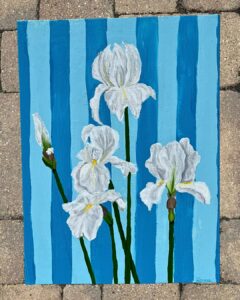
AAPLD is pleased to welcome the Land Conservancy of McHenry County back to our Art Wall, displaying the entries in the organization's 2026 photo contest.
Stop in and enjoy a look at the plants, animals and inspiring natural beauty of McHenry County!


Read any book that is about, or takes place in, a U.S. state or region. Examples include Alaska, Appalachia, the East or West Coast, the Great Lakes, the Midwest, New England, the Pacific Northwest, the South, Southwest, or any U.S. territory (American Samoa, Guam, Northern Mariana Islands, Puerto Rico, U.S. Virgin Islands).
Read any book about one or more of the groups, past or present, that make up the American people.
Read any book about one of the following
Read any book about any topic related to American history, as long as it is
Read any book by or about a U.S. historical figure, or their life or work.
Read any U.S. historical document (i.e., the Constitution, the Federalist Papers) OR a book featuring themes of American democracy, government, or law.
individuals or groups to achieve full civil rights for themselves or for others.
Read a non-fiction book about education or literacy OR a novel set in an American school (including colleges and universities), library, or museum.
Read any fiction or non-fiction book that explores the hopes, struggles, and journeys of people seeking a better life in America. These stories may focus on ambition, opportunity, family, identity, or the challenges of building a new and better life.
Read any fiction or non-fiction book about a product, scientific discovery, or American company.
Read any book that has been designated a “Great American Novel” by literary critics or experts.
Read any book about an American pursuing their passions or hobbies.
Take a look at the
Choose from over 130 varieties of vegetable, fruit, flower and herb seeds! Options include:
Although we call it a "Seed Library," no library card is required and you don't need to return seeds from your harvest. However, we'd love to see photos of your garden and crops! Email them to us at