Spice Club – April 2026 – Fennel Seeds

Spice Club – April 2026 – Fennel Seeds

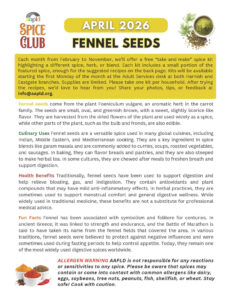
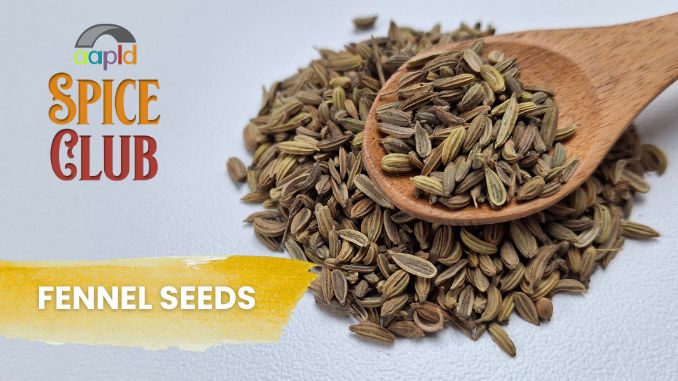
Fennel seeds come from the plant Foeniculum vulgare, an aromatic herb in the carrot family. The seeds are small, oval, and greenish-brown, with a sweet, slightly licorice-like flavor. They are harvested from the dried flowers of the plant and used widely as a spice, while other parts of the plant, such as the bulb and fronds, are also edible.

Culinary Uses: Fennel seeds are a versatile spice used in many global cuisines, including Indian, Middle Eastern, and Mediterranean cooking. They are a key ingredient in spice blends like garam masala and are commonly added to curries, soups, roasted vegetables, and sausages. In baking, they can flavor breads and pastries, and they are also steeped to make herbal tea. In some cultures, they are chewed after meals to freshen breath and support digestion.

Health Benefits: Traditionally, fennel seeds have been used to support digestion and help relieve bloating, gas, and indigestion. They contain antioxidants and plant compounds that may have mild anti-inflammatory effects. In herbal practices, they are sometimes used to support menstrual comfort and general digestive wellness. While widely used in traditional medicine, these benefits are not a substitute for professional medical advice.

Fun Facts: Fennel has been associated with symbolism and folklore for centuries. In ancient Greece, it was linked to strength and endurance, and the Battle of Marathon is said to have taken its name from the fennel fields that covered the area. In various traditions, fennel seeds were believed to protect against negative influences and were sometimes used during fasting periods to help control appetite. Today, they remain one of the most widely used digestive spices worldwide.

ALLERGEN WARNING: AAPLD is not responsible for any reactions or sensitivities to any spice. Please be aware that spices may contain or come into contact with common allergens like dairy, eggs, soybeans, tree nuts, peanuts, fish, shellfish, or wheat. Stay safe! Cook with caution.

Download Recipes
AAPLD Spice Club, April 2026 - Fennel Seeds

Spice Club – March 2026 – Thyme

Spice Club – March 2026 – Thyme

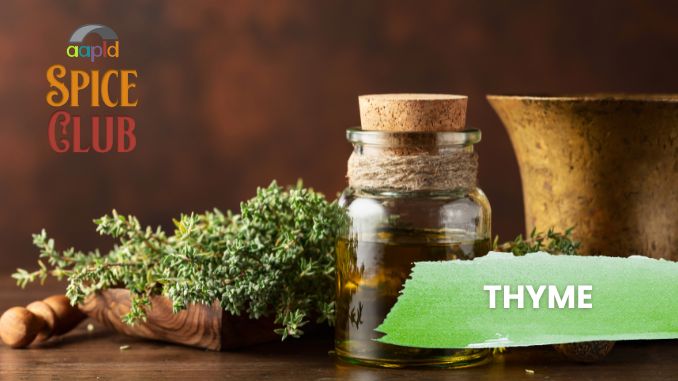
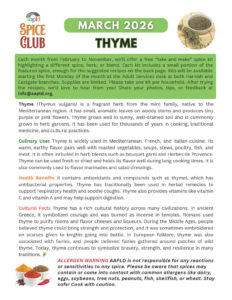
Thyme (Thymus vulgaris) is a fragrant herb from the mint family, native to the Mediterranean region. It has small, aromatic leaves on woody stems and produces tiny purple or pink flowers. Thyme grows well in sunny, well-drained soil and is commonly grown in herb gardens. It has been used for thousands of years in cooking, traditional medicine, and cultural practices.

Culinary Uses: Thyme is widely used in Mediterranean, French, and Italian cuisine. Its warm, earthy flavor pairs well with roasted vegetables, soups, stews, poultry, fish, and meat. It is often included in herb blends such as bouquet garni and Herbes de Provence. Thyme can be used fresh or dried and holds its flavor well during long cooking times. It is also commonly used to flavor marinades and salad dressings.

Health Benefits: It contains antioxidants and compounds such as thymol, which has antibacterial properties. Thyme has traditionally been used in herbal remedies to support respiratory health and soothe coughs. Thyme also provides vitamins like vitamin C and vitamin A and may help support digestion.

Cultural Facts: Thyme has a rich cultural history across many civilizations. In ancient Greece, it symbolized courage and was burned as incense in temples. Romans used thyme to purify rooms and flavor cheeses and liqueurs. During the Middle Ages, people believed thyme could bring strength and protection, and it was sometimes embroidered on scarves given to knights going into battle. In European folklore, thyme was also associated with fairies, and people believed fairies gathered around patches of wild thyme. Today, thyme continues to symbolize bravery, strength, and resilience in many traditions.

ALLERGEN WARNING: AAPLD is not responsible for any reactions or sensitivities to any spice. Please be aware that spices may contain or come into contact with common allergens like dairy, eggs, soybeans, tree nuts, peanuts, fish, shellfish, or wheat. Stay safe! Cook with caution.

Download Recipes
Spice Club – February 2026 – Allspice

Spice Club – February 2026 – Allspice

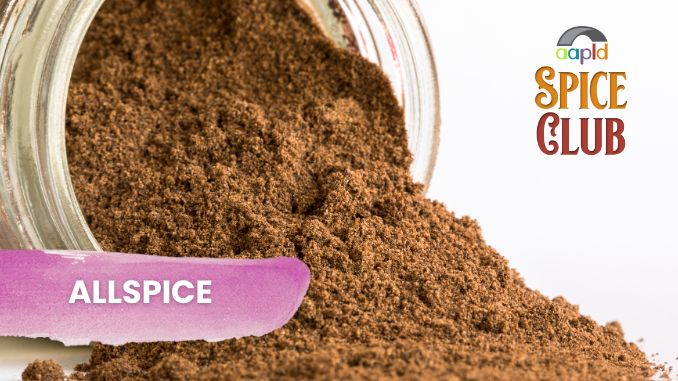
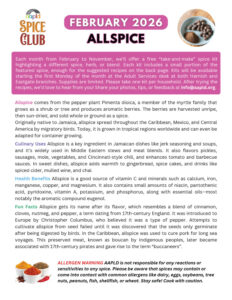
Allspice comes from the pepper plant Pimenta dioica, a member of the myrtle family that grows as a shrub or tree and produces aromatic berries. The berries are harvested unripe, then sun-dried, and sold whole or ground as a spice. Originally native to Jamaica, allspice spread throughout the Caribbean, Mexico, and Central America by migratory birds. Today, it is grown in tropical regions worldwide and can even be
adapted for container growing.

Culinary Uses: Allspice is a key ingredient in Jamaican dishes like jerk seasoning and soups, and it’s widely used in Middle Eastern stews and meat blends. It also flavors pickles, sausages, mole, vegetables, and Cincinnati-style chili, and enhances tomato and barbecue sauces. In sweet dishes, allspice adds warmth to gingerbread, spice cakes, and drinks like spiced cider, mulled wine, and chai.

Health Benefits: Allspice is a good source of vitamin C and minerals such as calcium, iron, manganese, copper, and magnesium. It also contains small amounts of niacin, pantothenic acid, pyridoxine, vitamin A, potassium, and phosphorus, along with essential oils—most notably the aromatic compound eugenol.

Fun Facts: Allspice gets its name after its flavor, which resembles a blend of cinnamon, cloves, nutmeg, and pepper, a term dating from 17th-century England. It was introduced to Europe by Christopher Columbus, who believed it was a type of pepper. Attempts to cultivate allspice from seed failed until it was discovered that the seeds only germinate after being digested by birds. In the Caribbean, allspice was used to cure pork for long sea voyages. This preserved meat, known as boucan by Indigenous peoples, later became associated with 17th-century pirates and gave rise to the term “buccaneers”.

ALLERGEN WARNING: AAPLD is not responsible for any reactions or sensitivities to any spice. Please be aware that spices may contain or come into contact with common allergens like dairy, eggs, soybeans, tree nuts, peanuts, fish, shellfish, or wheat. Stay safe! Cook with caution.

Download Recipes

Spice Club – November 2025 – Tarragon

Spice Club – November 2025 – Tarragon

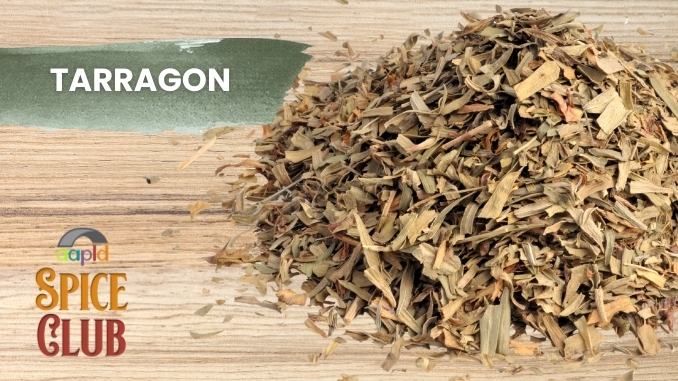
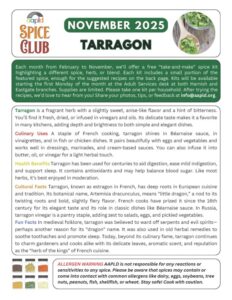
Tarragon is a fragrant herb with a slightly sweet, anise-like flavor and a hint of bitterness. You’ll find it fresh, dried, or infused in vinegars and oils. Its delicate taste makes it a favorite in many kitchens, adding depth and brightness to both simple and elegant dishes.

Culinary Uses: A staple of French cooking, tarragon shines in Béarnaise sauce, in vinaigrettes, and in fish or chicken dishes. It pairs beautifully with eggs and vegetables and works well in dressings, marinades, and cream-based sauces. You can also infuse it into butter, oil, or vinegar for a light herbal touch.

Health Benefits: Tarragon has been used for centuries to aid digestion, ease mild indigestion, and support sleep. It contains antioxidants and may help balance blood sugar. Like most herbs, it’s best enjoyed in moderation.

Cultural Facts: Tarragon, known as estragon in French, has deep roots in European cuisine and tradition. Its botanical name, Artemisia dracunculus, means “little dragon,” a nod to its twisting roots and bold, slightly fiery flavor. French cooks have prized it since the 16th century for its elegant taste and its role in classic dishes like Béarnaise sauce. In Russia, tarragon vinegar is a pantry staple, adding zest to salads, eggs, and pickled vegetables.

Fun Facts: In medieval folklore, tarragon was believed to ward off serpents and evil spirits— perhaps another reason for its “dragon” name. It was also used in old herbal remedies to soothe toothaches and promote sleep. Today, beyond its culinary fame, tarragon continues to charm gardeners and cooks alike with its delicate leaves, aromatic scent, and reputation as the “herb of the kings” of French cuisine.

ALLERGEN WARNING: AAPLD is not responsible for any reactions or sensitivities to any spice. Please be aware that spices may contain or come into contact with common allergens like dairy, eggs, soybeans, tree nuts, peanuts, fish, shellfish, or wheat. Stay safe! Cook with caution.

Download Recipes

Spice Club – October 2025 – Ground Sage

Spice Club – October 2025 – Ground Sage

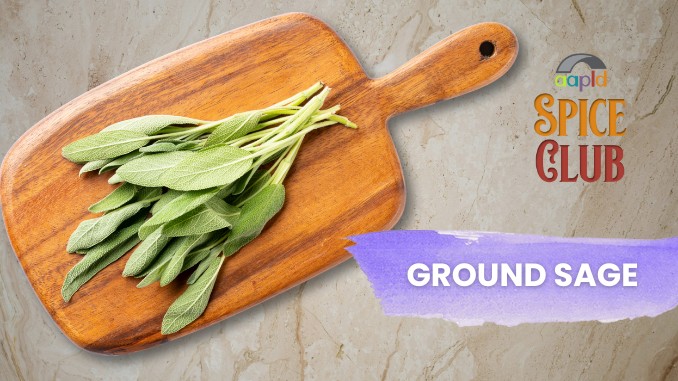
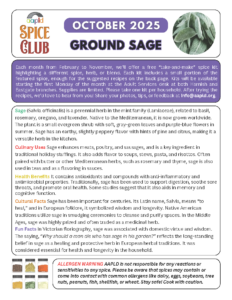
Sage (Salvia officinalis) is a perennial herb in the mint family (Lamiaceae), related to basil, rosemary, oregano, and lavender. Native to the Mediterranean, it is now grown worldwide. The plant is a small evergreen shrub with soft, gray-green leaves and purple-blue flowers in summer. Sage has an earthy, slightly peppery flavor with hints of pine and citrus, making it a versatile herb in the kitchen.

Culinary Uses: Sage enhances meats, poultry, and sausages, and is a key ingredient in traditional holiday stuffings. It also adds flavor to soups, stews, pasta, and risottos. Often paired with butter or other Mediterranean herbs, such as rosemary and thyme, sage is also used in teas and as a flavoring in sauces.

Health Benefits: It contains antioxidants and compounds with anti-inflammatory and antimicrobial properties. Traditionally, sage has been used to support digestion, soothe sore throats, and promote oral health. Some studies suggest that it also aids in memory and cognitive function.

Cultural Facts: Sage has been important for centuries. Its Latin name, Salvia, means “to heal,” and in European folklore, it symbolized wisdom and longevity. Native American traditions utilize sage in smudging ceremonies to cleanse and purify spaces. In the Middle Ages, sage was highly prized and often traded as a medicinal herb.

Fun Facts: In Victorian floriography, sage was associated with domestic virtue and wisdom. The saying, “Why should a man die who has sage in his garden?” reflects the long-standing belief in sage as a healing and protective herb in European herbal traditions. It was considered essential for health and longevity in the household.

ALLERGEN WARNING: AAPLD is not responsible for any reactions or sensitivities to any spice. Please be aware that spices may contain or come into contact with common allergens like dairy, eggs, soybeans, tree nuts, peanuts, fish, shellfish, or wheat. Stay safe! Cook with caution.

Download Recipes
Spice Club – September 2025 – Chili Powder

Spice Club – September 2025 – Chili Powder

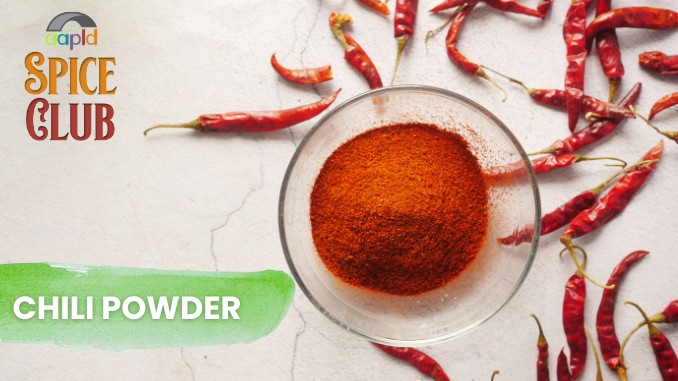
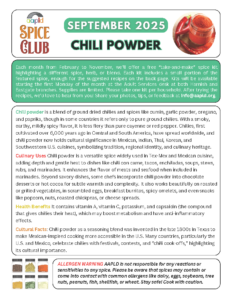
Chili powder is a blend of ground dried chilies and spices like cumin, garlic powder, oregano, and paprika, though in some countries it refers only to pure ground chilies. With a smoky, earthy, mildly spicy flavor, it is less fiery than pure cayenne or red pepper. Chilies, first cultivated over 6,000 years ago in Central and South America, have spread worldwide, and chili powder now holds cultural significance in Mexican, Indian, Thai, Korean, and Southwestern U.S. cuisines, symbolizing tradition, regional identity, and culinary heritage.

Culinary Uses: Chili powder is a versatile spice widely used in Tex-Mex and Mexican cuisine, adding depth and gentle heat to dishes like chili con carne, tacos, enchiladas, soups, stews, rubs, and marinades. It enhances the flavor of meats and seafood when included in marinades. Beyond savory dishes, some chefs incorporate chili powder into chocolate desserts or hot cocoa for subtle warmth and complexity. It also works beautifully on roasted or grilled vegetables, in scrambled eggs, breakfast burritos, spicy omelets, and even snacks like popcorn, nuts, roasted chickpeas, or cheese spreads.

Health Benefits: It contains vitamin A, vitamin C, potassium, and capsaicin (the compound that gives chilies their heat), which may boost metabolism and have anti-inflammatory effects.

Cultural Facts: Chili powder as a seasoning blend was invented in the late 1800s in Texas to make Mexican-inspired cooking more accessible in the U.S. Many countries, particularly the U.S. and Mexico, celebrate chilies with festivals, contests, and “chili cook-offs,” highlighting its cultural importance.

ALLERGEN WARNING: AAPLD is not responsible for any reactions or sensitivities to any spice. Please be aware that spices may contain or come into contact with common allergens like dairy, eggs, soybeans, tree nuts, peanuts, fish, shellfish, or wheat. Stay safe! Cook with caution.

Download Recipes

Spice Club – August 2025 – Turmeric

Spice Club – August 2025 – Turmeric

Turmeric (Curcuma longa) is a vibrant yellow-orange spice derived from the root of a plant in the ginger family. Known for its warm, earthy, and slightly bitter flavor, it’s used both fresh and dried, often ground into a powder. Across a history spanning over 4,000 years, turmeric has played a key role in Ayurvedic medicine and Indian cuisine. Its rich color makes it a popular natural dye for textiles, foods, and cosmetics, though it’s notorious for staining hands, clothes, and surfaces. Often referred to as "Indian Saffron," turmeric is prized for its golden color and central place in South Asian cooking.

Culinary Uses: Turmeric is a staple in Indian cuisine, featured in curries, dals, biryanis, and  spice blends like garam masala. It's also used in Middle Eastern and Southeast Asian dishes such as Thai yellow curry and Malaysian rendang. Beyond cooking, it's the key ingredient in golden milk and adds color and flavor to rice, soups, pickles, and mustards. Pairing it with black pepper boosts absorption of curcumin, its main active compound.

Health Benefits: Turmeric is known for its anti-inflammatory and antioxidant properties, which may aid digestion, boost immunity, support brain and heart health, and help with conditions like arthritis. While dietary turmeric is helpful, most research is based on concentrated extracts, which deliver stronger effects.

Cultural Facts: During Hindu weddings, a turmeric paste (haldi) is applied to the bride and groom to purify, bless, and beautify them. It is also used in religious rituals (pujas), where it’s smeared on sacred objects or doorways to invite protection and prosperity.

ALLERGEN WARNING: AAPLD is not responsible for any reactions or sensitivities to any spice. Please be aware that spices may contain or come into contact with common allergens like dairy, eggs, soybeans, tree nuts, peanuts, fish, shellfish, or wheat. Stay safe! Cook with caution.

Download Recipes
Spice Club – July 2025 – Smoked Paprika

Spice Club – July 2025 – Smoked Paprika

Paprika comes from dried and ground peppers (Capsicum annuum), native to Mexico and Central America. It was introduced to Europe in the 16th century via Spanish and Portuguese invaders. Spain and Hungary became major paprika producers. Hungarian paprika, especially from Szeged and Kalocsa, is world-renowned for its depth of flavor. The word “paprika” comes from the Hungarian language, derived from the Serbo-Croatianpapar (pepper). Smoked paprika gets its flavor by drying the peppers over oak wood fires.

Culinary Uses: Paprika is essential in Hungarian dishes like goulash, chicken paprikash, and halászlé. In Spain, smoked paprika (pimentón) flavors chorizo, stews, and paella. A dash adds color and mild heat to veggies, eggs, soups, and sauces. Paprika varies from sweet to hot to smoked, depending on the pepper and how it’s dried.

Health Benefits: Paprika is packed with antioxidants, including capsanthin, carotenoids, and vitamin E, which help protect cells from damage. It’s an excellent source of vitamin A, known for supporting vision and a strong immune system. The capsaicin found in hot varieties may help reduce inflammation and boost metabolism. Additionally, paprika provides iron and vitamin B6, both important for red blood cell formation and brain function.

Fun Facts: Paprika is often used in food styling to add a rich red hue to dishes. In Hungary, paprika is considered the “national spice”, and families often have their own blends passed down through generations.

ALLERGEN WARNING: AAPLD is not responsible for any reactions or sensitivities to any spice. Please be aware that spices may contain or come into contact with common allergens like dairy, eggs, soybeans, tree nuts, peanuts, fish, shellfish, or wheat. Stay safe! Cook with caution.

Download Recipes
Spice Club – June 2025 – Ginger

Spice Club – June 2025 – Ginger

Ginger, a flowering plant native to Southeast Asia, is widely known for its spicy, slightly sweet flavor and warming properties. Scientifically known as Zingiber officinale, it has been used for thousands of years in culinary and medicinal traditions around the world. It belongs to the same family as turmeric and cardamom, and is a staple in Asian, Indian, and Middle Eastern cuisines. It’s commonly used fresh, dried, powdered, or as an oil or juice.

Culinary Uses: Ginger adds bold flavor to stir-fries, soups, curries, and marinades. It’s also popular in baking, pairing well with cinnamon and cloves in cookies, cakes, and muffins. Ginger appears in tea, ginger ale, and cocktails, and is enjoyed pickled with sushi, or candied in desserts and cheese boards. Fresh ginger can even add a zesty kick to dressings and fruit salads.

Health Benefits: Ginger offers a range of health benefits. It’s well known for easing nausea aiding digestion, and reducing inflammation. Its antioxidant properties may help boost immunity and support heart health. Ginger can also relieve muscle pain and menstrual discomfort, and may help lower blood sugar and cholesterol levels when consumed regularly. While helpful, ginger is not a substitute for medical treatment or medication.

Fun Facts: Ginger isn't actually a root, but a rhizome, an underground stem. In medievaltimes, a pound of ginger was as valuable as a live sheep in Europe due to its rarity. Canada Dry ginger ale was invented in 1904, and people originally drank it to settle their stomachs.

Download Recipes

Spice Club – May 2025 – Caraway

Spice Club – May 2025 – Caraway

Caraway seeds are the dried fruits of the Carum carvi plant, which belongs to the parsley family. Native to western Asia, Europe, and North Africa, these crescent-shaped brown seeds are commonly used as a spice. They have a warm, slightly sweet flavor with hints of anise, fennel, and citrus, offering a pungent, earthy taste with a touch of peppery licorice.

Culinary Uses: Popular in European cuisine, especially German, Hungarian, Austrian, and Scandinavian, caraway seeds are used in rye bread, sauerkraut, sausages, goulash, and cheese. It adds depth to vegetable stews, soups, roasted meats, and even baked goods like crackers and biscuits. When used medicinally, caraway can be made into a tea or soup or taken as a supplement.

Health Benefits: Caraway is known to support healthy digestion by relieving bloating, gas, and indigestion. It's also rich in antioxidants that protect the body from oxidative stress and contribute to overall wellness. With natural anti-inflammatory and antimicrobial properties, caraway may help reduce inflammation and support immune health by fighting certain bacteria and fungi. You can also apply its essential oils to your skin.

Fun Facts: In European folklore, caraway was believed to prevent theft. People would keep caraway with valuables or even feed it to livestock and loved ones to keep them from
"wandering." During the 17th century, the sugar-coated seeds of caraway were consumed at the end of the meal to facilitate digestion.

Download Recipes