Family History Month at AAPLD

Family History Month at AAPLD

Registration is open for October and November Genealogy Programs! Click program names to register.

Finders/Keepers Genealogy Club - A Genealogy Interest Group

Join us each month at Finders/Keepers Genealogy Club to explore genealogy topics and resources, and to get help with your family research.

Thursday, October 13: 7:00pm - 8:30pm
Online or in-person at Harnish Main

Beginning Polish Genealogy

Explore your Polish heritage with the help of Polish genealogy expert and author Jason Kruski. This in-person genealogy program is appropriate for beginners.

Saturday, October 15: 1:00pm - 2:00pm
In-person at Eastgate Branch

Available October 14: Algonquin Cemetery Scavenger Hunt

Participate online or pick up a paper entry form at the Adult Services Desk. Each correct answer will earn an entry into a prize drawing

 DNA Deep Dive Workshop - A Genealogy program

Have you already taken a DNA test and don't know how to use the results? Join this in-person DNA workshop and learn how to sort your DNA matches, chart relationships, and extend your family tree.

Thursday, October 20: 7:00pm - 8:30pm
Computer Lab Harnish

Finders/Keepers Genealogy Club - A Genealogy Interest Group

Join us each month at Finders/Keepers Genealogy Club to explore genealogy topics and resources, and to get help with your family research.

Thursday, November 10: 10:00am - 11:30am
Online or in-person at Harnish Main

4 Genealogy Quick-start Tips

4 Genealogy Quick-start Tips

Genealogy is a very rewarding hobby, and with the help of library resources, you can find and add ancestors to your tree. But, how do you begin? These 4 tips will get you off to a quick start on your family tree:

Keep it simple
Begin with a basic paper pedigree/tree form and fill in basic information. You can always enter this information later into an online tree or computer genealogy program. An ancestral chart allows you to see your family tree at a glance: https://www.archives.gov/files/research/genealogy/charts-forms/ancestral-chart.pdf  The standard is to use maiden names for women; use UNKNOWN for those names you cannot find documentation for. You might use a question mark (?) for information believed to be correct but not yet verified.

Start and stay organized
Details for parents and their children are easily grouped together on a family group sheet: https://www.archives.gov/files/research/genealogy/charts-forms/family-group-sheet.pdf  Keep these and ancestral charts in a binder, grouped by family lines. Add copies of record images as you find them, and file them according to their subject person. A child from one family gets moved to their own family group sheet when they marry.

Document
Always begin with the facts you already know about your family. Fill in family group sheets for your parents, and then for their parents. Verify and document dates and locations of births, marriages and deaths wherever possible. Research and fill in one generation at a time. If you get stuck on a date or location, make a note and get research help at the library to find the documentation that you are missing.

Research
Do not assume someone else’s research on your family is correct. Many well-meaning hobby genealogists post their family trees without any supporting records. Inaccuracies are easily passed on, and multiple online family trees may share the same incorrect information. You can get great research clues by using someone’s existing tree, but ALWAYS verify suggested information by finding records that document it. When you are stumped at proving some information for an ancestor (known as a “brick wall”), keep a research log to note what documentation you are missing, and use this to guide your next steps.

Want to learn the basics of building a family tree? Register (beginning July 15th) for our Genealogy Basics class being held August 31, 2022, from 10AM to 11AM.

Find your family using the 1950 Census!

After the long 72-year waiting period, family researchers finally have access to the 1950 Federal Census.

Learn more about using this resource for genealogy. We will be hosting a webinar with Lisa Louise Cooke, and she will guide us through the 1950 Census. The May 17th webinar was cancelled due to circumstances beyond our control, but the program will be rescheduled! Watch this blog for the new date and registration information.

The 1950 Census has now been indexed for searching on Ancestry Library Edition, which is available for in-library use only. Use this resource for free during your next visit, and find your family in the 1950 census.

Interested in attending our monthly genealogy interest group? Click here for information about our next meeting, coming up on May 10th at 10AM. Attend virtually via Zoom OR in person!


The 1950 Census is Here!

The 1950 Census is Here!

The 1950 Census is Here!

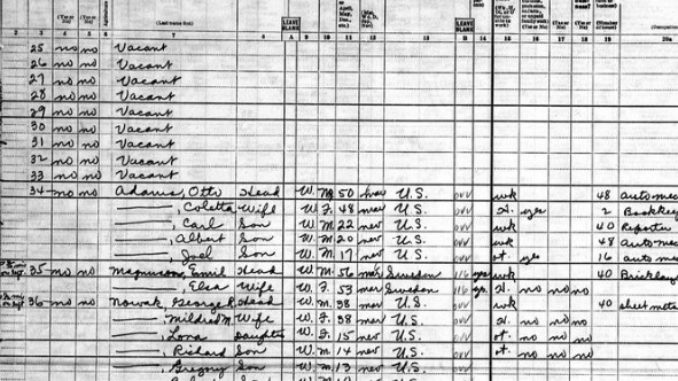
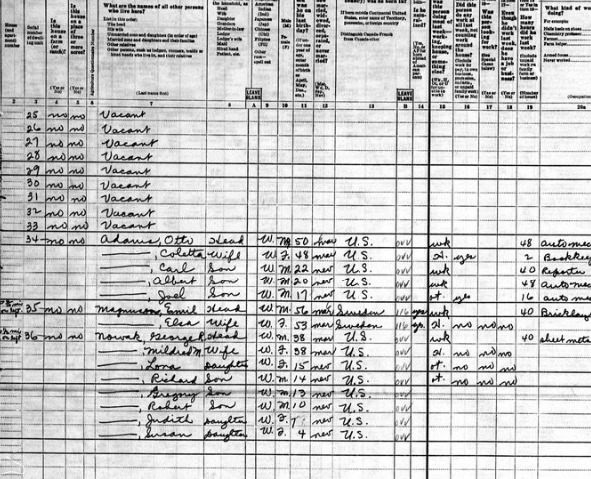
The excitement is real for genealogy fans. On April 1st, the 1950 Census was released by the National Archives. The 1950 census is available to browse at the National Archives website: https://www.archives.gov/research/census/1950

This census is not yet fully indexed, but there is a search engine for the AI (machine) index- it\'s kind of like OCR for handwriting, so you can imagine how imperfect it might be. You might be lucky with a first name/last name search, but if you do not find who you are looking for, try again after a few weeks.
Try these steps to find your ancestors:
  • If you know the complete street address, city and state, use this website to determine the Enumeration District: https://stevemorse.org/census/unified.html
  • At the National Archives site linked above, use the ED # to search for your ancestors. You may need to scroll through several pages.
  • Check the pages at the end of each film set for the enumeration of those who were \"not at home\" when the census taker came by the first time.

If you have questions or want an overview of this process, sign up for our May 17th program: Your Guide to the 1950 Census with Lisa Louise Cooke. This virtual program will not  be recorded, register here!

1950 census snip

Family Research Tips

Family Research Tips

Read all about it! Find your McHenry County ancestors in the newspaper

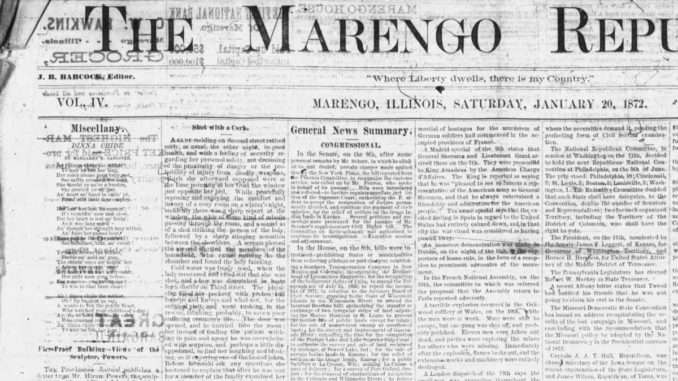
McHenry County early newspapers were filled with interesting tidbits that can help you fill in the details in your family history. From as early as 1846, with the Illinois Republican, McHenry County residents could read news from around the country and keep up with the affairs of the world around them. You may find your ancestor mentioned in society news, death notices or obituaries, articles about local businesses, politics, or court cases. Start by using general search terms, using just a surname within a range of dates, for example. Widen searches to other locations in the county or different surname spellings if you come up empty. Don’t forget to search for related surnames, and search in nearby towns or townships; you may find a relative that will help you connect your family lines to others in the area.
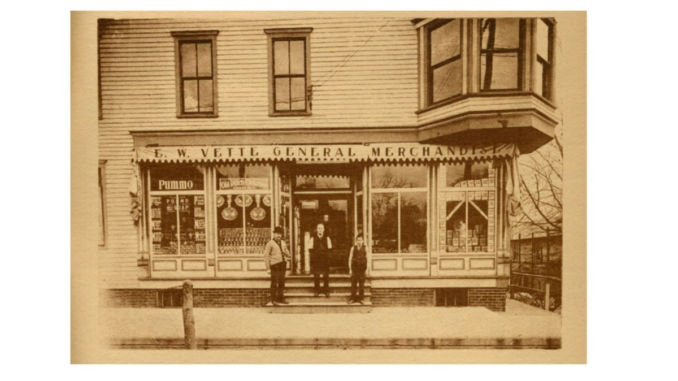
AAPLD offers patrons three databases that provide access to some of McHenry County’s earliest newspapers. The first newspaper in the county was the Illinois Republican. In 1854 it became the Republican Free-Press, and in 1856 became the Woodstock Sentinel, which still publishes today.
Go to Newspapers.com for these papers:

  • The Algonquin Herald – 1902 to 1910
  • The Sentinel (Woodstock) – 1860 to 1926.
  • Daily Sentinel (Woodstock) – 1922 to 1985.
  • Crystal Lake Herald – 1875 to 1963.
  • McHenry Plaindealer – 1875 to 1985. (Later merged with The Northwest Herald.)
  • Marengo Beacon/Republican – 1872 to 1986.
  • The Northwest Herald is available at Chicago Area Newspapers from 2005 to present day.

You will need your AAPLD library card and PIN to access these databases. From another library? Check with your library to find out how you can access early local newspapers.

Local History Notes

Local History Notes

Naming the Village of Algonquin

The village was first known as Cornish’s Ferry, from Dr. A. B. Cornish, an early settler near the ford above mentioned [Crystal Lake inlet to the Fox River]. Later, when a considerable settlement had grown up, by vote of the inhabitants the name Osceola was adopted. But it was learned that there was already a town of the same name in the State. Therefore the choice of a permanent name was left to Mr. Edwards, the chief property owner in the village, and he chose the name which it now bears.

~From the 1885 History of McHenry County, p. 390.

Algonquin was the name of a ship Mr. Edwards once owned, according to the Village of Algonquin website. The name Algonquin became official on December 23, 1847.

These Local History Notes were transcribed from the History of McHenry County, Illinois: together with sketches of its cities, villages and towns, educational, religious, civil, military, and political history, portraits of prominent persons, and biographies of representative citizens. The book was originally published in 1885, and reprint copies are available for use at the Algonquin Library.

Ask at the Adult Services desk for assistance in finding these and other local history materials.

Welcome back to Genealogy at AAPLD

Welcome back to Genealogy at AAPLD

Welcome back!
Beginning in April, join us for a monthly Genealogy Interest Group. Just getting started or stuck at a brick wall? This group is for you! Learn about genealogy topics and resources, and get help with your family research. Bring your genealogy questions and dig into the library’s online resources (and more!). Check the LIBRARY NEWSLETTER  for these programs and others!

Online resources
Check out these GENEALOGY RESOURCES available through AAPLD.
Some are available from home, while others are available in-library only.

In-library Research
Our special genealogy and local history collection provides books that will help you research your family and learn about the rich history of Algonquin and the surrounding area. Browse the collection and work on your family research in our Genealogy section in Adult Services. SEARCH THE CATALOG

Have questions?
Ask a Genealogy Librarian for help with genealogy questions.