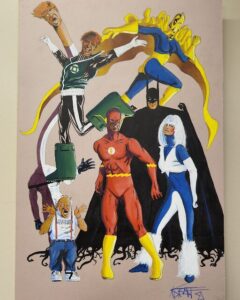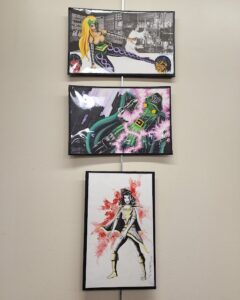
Super Hero fans won't want to miss this month's exhibit on the AAPLD Art Wall. Local artist (and AAPLD staff member) Drew Kristoff's love for art and comics is on colorful display during the month of July. Learn a little more about Drew and his work.
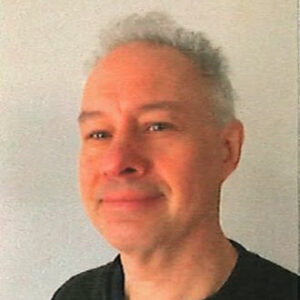 Artist: Drew Kristoff
Background/Training: I've been drawing since grade school, and by the time I got to junior high, I started to get more serious. Like most artists, I copied other artist's work, which taught me about layout, perspective and shading. In high school, I spent a lot of time filling sketchbooks with original and inspired art. My high school art teachers encouraged me, and I started to explore new techniques. After high school, I attended the American Academy of Art in Chicago, where I studied fundamentals, figure drawing, illustration, advertising and even tried a semester of oil painting. I graduated with an Associates degree in Illustration/Graphic Design.
What inspires your work: I can get inspiration from almost anything, possibly something I see when walking or driving or from viewing other artist's works.
What is your favorite medium: My favorite medium is using colored pencils and then adding additional dimensions by adding pastels or watercolors to enhance the illustration.
How can someone contact you: I accept freelance work, please contact me by email at dkristoff@sbcglobal.net