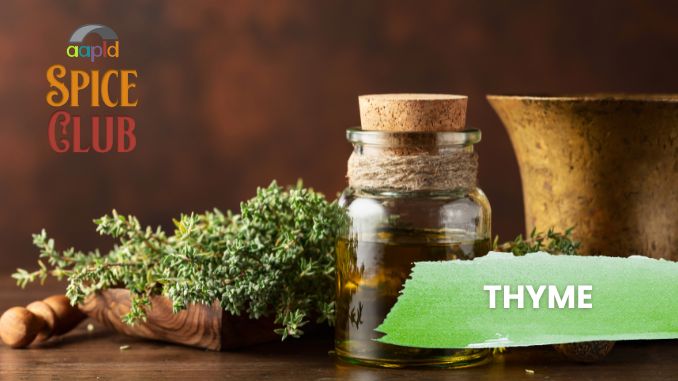
Thyme (Thymus vulgaris) is a fragrant herb from the mint family, native to the Mediterranean region. It has small, aromatic leaves on woody stems and produces tiny purple or pink flowers. Thyme grows well in sunny, well-drained soil and is commonly grown in herb gardens. It has been used for thousands of years in cooking, traditional medicine, and cultural practices.
Culinary Uses: Thyme is widely used in Mediterranean, French, and Italian cuisine. Its warm, earthy flavor pairs well with roasted vegetables, soups, stews, poultry, fish, and meat. It is often included in herb blends such as bouquet garni and Herbes de Provence. Thyme can be used fresh or dried and holds its flavor well during long cooking times. It is also commonly used to flavor marinades and salad dressings.
Health Benefits: It contains antioxidants and compounds such as thymol, which has antibacterial properties. Thyme has traditionally been used in herbal remedies to support respiratory health and soothe coughs. Thyme also provides vitamins like vitamin C and vitamin A and may help support digestion.
Cultural Facts: Thyme has a rich cultural history across many civilizations. In ancient Greece, it symbolized courage and was burned as incense in temples. Romans used thyme to purify rooms and flavor cheeses and liqueurs. During the Middle Ages, people believed thyme could bring strength and protection, and it was sometimes embroidered on scarves given to knights going into battle. In European folklore, thyme was also associated with fairies, and people believed fairies gathered around patches of wild thyme. Today, thyme continues to symbolize bravery, strength, and resilience in many traditions.
ALLERGEN WARNING: AAPLD is not responsible for any reactions or sensitivities to any spice. Please be aware that spices may contain or come into contact with common allergens like dairy, eggs, soybeans, tree nuts, peanuts, fish, shellfish, or wheat. Stay safe! Cook with caution.
Download Recipes