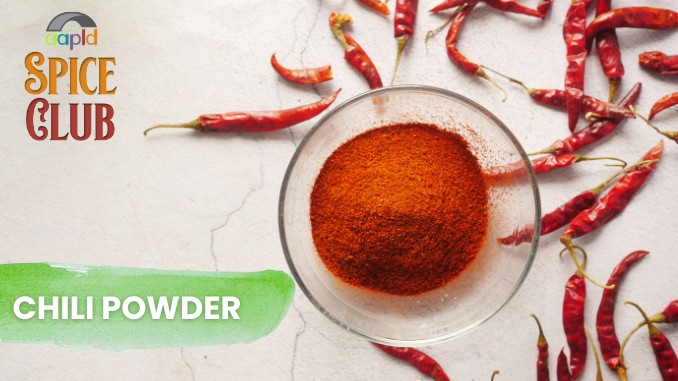
Chili powder is a blend of ground dried chilies and spices like cumin, garlic powder, oregano, and paprika, though in some countries it refers only to pure ground chilies. With a smoky, earthy, mildly spicy flavor, it is less fiery than pure cayenne or red pepper. Chilies, first cultivated over 6,000 years ago in Central and South America, have spread worldwide, and chili powder now holds cultural significance in Mexican, Indian, Thai, Korean, and Southwestern U.S. cuisines, symbolizing tradition, regional identity, and culinary heritage.
Culinary Uses: Chili powder is a versatile spice widely used in Tex-Mex and Mexican cuisine, adding depth and gentle heat to dishes like chili con carne, tacos, enchiladas, soups, stews, rubs, and marinades. It enhances the flavor of meats and seafood when included in marinades. Beyond savory dishes, some chefs incorporate chili powder into chocolate desserts or hot cocoa for subtle warmth and complexity. It also works beautifully on roasted or grilled vegetables, in scrambled eggs, breakfast burritos, spicy omelets, and even snacks like popcorn, nuts, roasted chickpeas, or cheese spreads.
Health Benefits: It contains vitamin A, vitamin C, potassium, and capsaicin (the compound that gives chilies their heat), which may boost metabolism and have anti-inflammatory effects.
Cultural Facts: Chili powder as a seasoning blend was invented in the late 1800s in Texas to make Mexican-inspired cooking more accessible in the U.S. Many countries, particularly the U.S. and Mexico, celebrate chilies with festivals, contests, and “chili cook-offs,” highlighting its cultural importance.
ALLERGEN WARNING: AAPLD is not responsible for any reactions or sensitivities to any spice. Please be aware that spices may contain or come into contact with common allergens like dairy, eggs, soybeans, tree nuts, peanuts, fish, shellfish, or wheat. Stay safe! Cook with caution.
Download Recipes