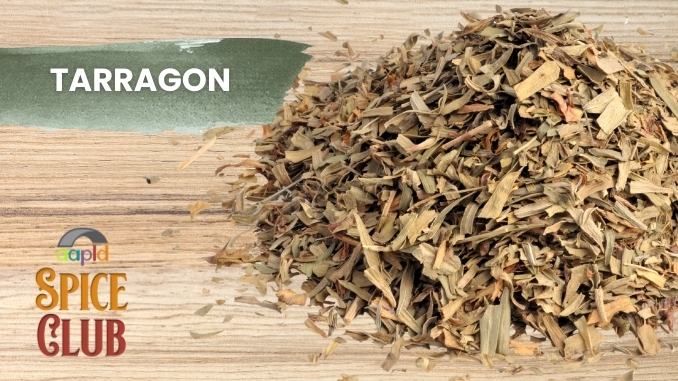
Tarragon is a fragrant herb with a slightly sweet, anise-like flavor and a hint of bitterness. You’ll find it fresh, dried, or infused in vinegars and oils. Its delicate taste makes it a favorite in many kitchens, adding depth and brightness to both simple and elegant dishes.
Culinary Uses: A staple of French cooking, tarragon shines in Béarnaise sauce, in vinaigrettes, and in fish or chicken dishes. It pairs beautifully with eggs and vegetables and works well in dressings, marinades, and cream-based sauces. You can also infuse it into butter, oil, or vinegar for a light herbal touch.
Health Benefits: Tarragon has been used for centuries to aid digestion, ease mild indigestion, and support sleep. It contains antioxidants and may help balance blood sugar. Like most herbs, it’s best enjoyed in moderation.
Cultural Facts: Tarragon, known as estragon in French, has deep roots in European cuisine and tradition. Its botanical name, Artemisia dracunculus, means “little dragon,” a nod to its twisting roots and bold, slightly fiery flavor. French cooks have prized it since the 16th century for its elegant taste and its role in classic dishes like Béarnaise sauce. In Russia, tarragon vinegar is a pantry staple, adding zest to salads, eggs, and pickled vegetables.
Fun Facts: In medieval folklore, tarragon was believed to ward off serpents and evil spirits— perhaps another reason for its “dragon” name. It was also used in old herbal remedies to soothe toothaches and promote sleep. Today, beyond its culinary fame, tarragon continues to charm gardeners and cooks alike with its delicate leaves, aromatic scent, and reputation as the “herb of the kings” of French cuisine.
ALLERGEN WARNING: AAPLD is not responsible for any reactions or sensitivities to any spice. Please be aware that spices may contain or come into contact with common allergens like dairy, eggs, soybeans, tree nuts, peanuts, fish, shellfish, or wheat. Stay safe! Cook with caution.
Download Recipes